← Home · Laboratory

Atterberg Limits Testing in Frisco Texas for Foundation Design

Together, we solve the challenges of tomorrow.

LEARN MORE →

Frisco sits at an elevation of 774 feet, positioned squarely within the Blackland Prairie where highly plastic clays extend to depths of 20 feet or more. The city's explosive growth—crossing the 200,000-resident mark in 2025—means thousands of new slab foundations are poured annually over the Eagle Ford Shale formation. Atterberg limits testing becomes the gatekeeper for every one of those pours: without liquid limit and plasticity index data, engineers cannot classify the soil per ASTM D2487 or predict its shrink-swell behavior during North Texas drought cycles. Our Frisco laboratory processes samples under ASTM D4318 protocols, returning Atterberg limits results within 48 hours so that footing design decisions never hold up the construction schedule. For deeper stratigraphic context on sites near Stewart Creek or the Elm Fork tributaries, we often pair Atterberg classification with SPT drilling to correlate plasticity with blow count resistance at depth.

In Frisco's Blackland Prairie clays, a plasticity index above 30 means the difference between a standard slab and a post-tensioned foundation—and that decision starts with Atterberg limits.

Our approach and scope

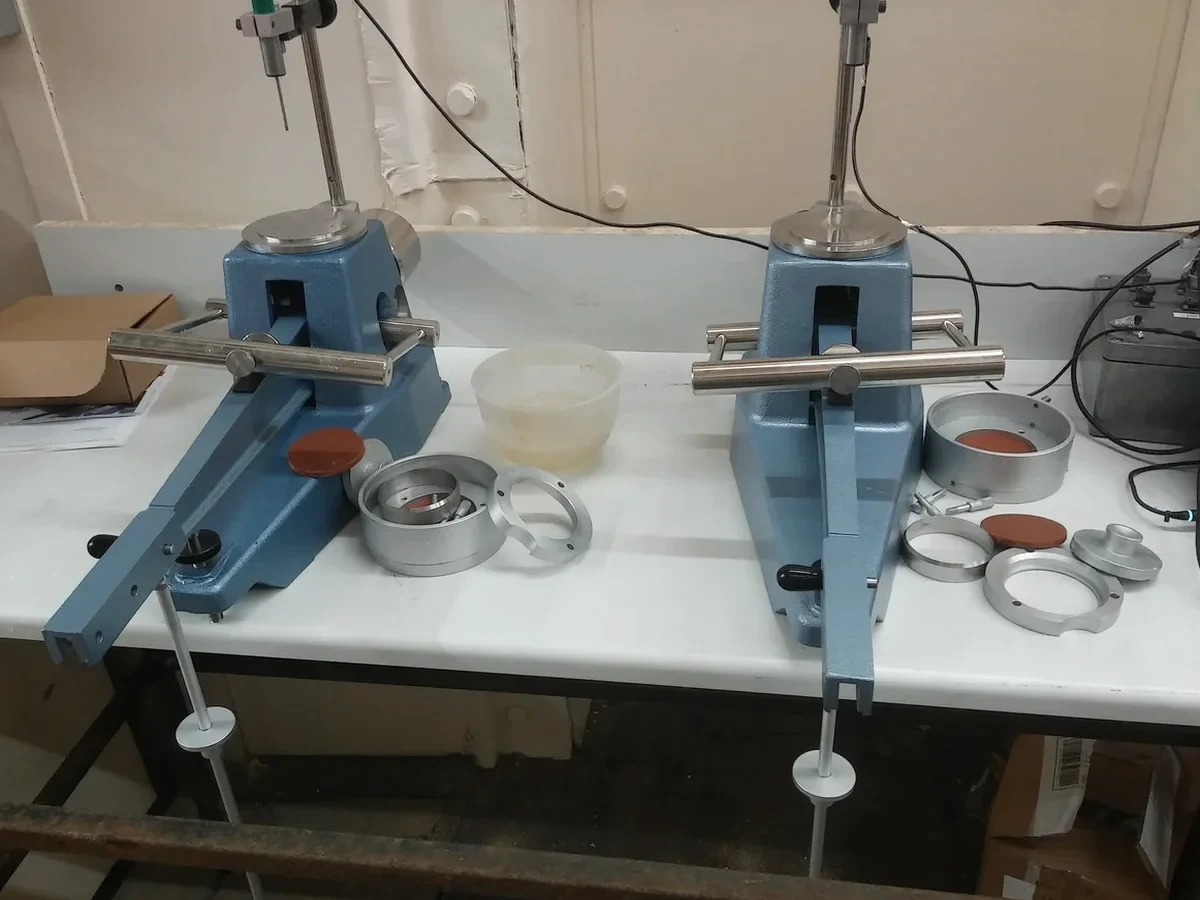
The Taylor Marl and Eagle Ford formations under Frisco produce clays with liquid limits routinely exceeding 55 percent and plasticity indices above 30—values that place these soils firmly in the CH (fat clay) category. A single percentage point shift in the plastic limit can reclassify a soil from suitable bearing material to a problematic expansive layer requiring mitigation. Our technicians run the Casagrande cup method for liquid limit determination and the rolling-thread procedure for plastic limit, both following ASTM D4318-17e1. The resulting plasticity chart placement drives every subsequent geotechnical recommendation. When site conditions reveal fill material or alluvial deposits near Panther Creek, we may supplement the index testing with a grain size analysis to separate the fine fraction from granular components, ensuring the Atterberg limits represent the true clay fraction rather than a blended material. The lab maintains a controlled drying environment because oven temperature excursions above 60°C can permanently alter clay mineralogy and skew the Atterberg results.
Atterberg Limits Testing in Frisco Texas for Foundation Design
Technical reference image — Frisco Texas

Local geotechnical context

The International Building Code (IBC 2021, Section 1803) and ASCE 7-22 require soil classification for all structures in Expansive Soil Severity Zones—a designation that covers virtually all of Collin County. Frisco's Unified Development Code further mandates geotechnical reports for commercial projects exceeding 5,000 square feet, and Atterberg limits constitute the minimum index testing required. The real risk surfaces when plasticity data is absent or outdated: a slab designed for CL soils that actually bears on CH material will experience differential heave during the wet season, followed by perimeter settlement in July when moisture content drops below the plastic limit. We have observed edge lift exceeding 2 inches in Frisco subdivisions where pre-construction Atterberg testing was omitted. Insurance claims for foundation repair in the 75034 and 75035 ZIP codes run into the tens of thousands annually, and most trace back to incomplete soil characterization at the design stage.

Need a geotechnical assessment?

Reply within 24h.

Email: [email protected]

Technical data

ParameterTypical value
ASTM StandardD4318-17e1
Liquid Limit DeviceCasagrande cup (brass, 1 cm drop height)
Plastic Limit ProcedureRolling thread to 3.2 mm (1/8 in) diameter
Plasticity Index (PI)LL - PL, reported to nearest integer
Sample PreparationWet preparation, passing No. 40 sieve
Moisture Content MethodASTM D2216 oven drying at 110 ± 5°C
Typical Turnaround24-48 hours from sample receipt
Soil Classification SystemUSCS per ASTM D2487

Complementary services

01

Atterberg Limits Suite (ASTM D4318)

Complete determination of liquid limit, plastic limit, and plasticity index on disturbed samples. Results plotted on the Casagrande plasticity chart with USCS classification. Suitable for foundation design, retaining wall backfill verification, and pavement subgrade evaluation.

02

Integrated Index Testing Package

Combines Atterberg limits with sieve and hydrometer analysis per ASTM D422/D6913 for full gradation curves. Recommended when soil behavior depends on both plasticity and particle size distribution, particularly for sites with mixed clay-sand profiles near Frisco's creeks.

Regulatory framework

ASTM D4318-17e1 (Standard Test Methods for Liquid Limit, Plastic Limit, and Plasticity Index of Soils), ASTM D2487-17e1 (Standard Practice for Classification of Soils for Engineering Purposes — USCS), IBC 2021 Section 1803 (Geotechnical Investigations), ASCE 7-22 Chapter 20 (Site Classification Procedure for Seismic Design), TxDOT Tex-104-E (Determining Liquid Limit of Soils)
Quick answers

How much does Atterberg limits testing cost for a Frisco project?

Our Atterberg limits test runs between US$60 and US$90 per sample when submitted individually. Volume pricing applies for multi-sample projects, and we offer bundled rates when combined with sieve analysis or Proctor compaction testing. The exact cost depends on the number of depth intervals tested and whether we pick up samples from your Frisco job site or you deliver them to the lab.

What is the minimum sample size needed for Atterberg limits testing?

We require approximately 300 grams of material passing the No. 40 (425-micron) sieve for full liquid limit and plastic limit determination. It is better to send a larger bulk sample—around 1 kilogram—so our technicians can perform the wet preparation and sieving in-house, ensuring the fine fraction is representative of the in-situ formation rather than a field-separated portion that may exclude clay coatings on sand grains.

How does the plasticity index affect foundation design in Frisco?

The plasticity index directly quantifies the soil's shrink-swell potential. In Frisco's Blackland Prairie, a PI below 15 indicates low expansion potential suitable for conventional slab-on-grade construction. A PI between 15 and 25 suggests moderate risk where thickened edges and steel reinforcement may suffice. When the PI exceeds 25—common for our Eagle Ford-derived clays—post-tensioned slabs or drilled pier foundations become the standard recommendation, and the design must account for potential vertical rise (PVR) values derived from the Atterberg limits and in-situ moisture profiles.

Location and service area

We serve projects in Frisco Texas and surrounding areas.

View larger map