← Home · Investigation

SPT Testing in Frisco, Texas – Standard Penetration Test

Together, we solve the challenges of tomorrow.

LEARN MORE →

In Frisco, we consistently see builders caught off guard by how fast soil conditions change across a single lot. The city sits on the Eagle Ford Shale formation, but the upper layers are dominated by stiff, highly expansive clays that swell with the seasonal rains and shrink during the long, dry North Texas summers. A standard penetration test gives us a direct look at what's happening below the grass line — N-values, soil type, and refusal depth — before you commit to a foundation type. We run the rig in full compliance with ASTM D1586 and IBC Chapter 18, delivering reports that structural engineers can use immediately. For deeper correlations in mixed strata, we often pair SPT data with a CPT test to confirm tip resistance in zones where blow counts jump erratically.

An SPT refusal at 12 feet in East Frisco means a completely different foundation strategy than refusal at 30 feet near Stonebriar — both are common, and both require different engineering.

Our approach and scope

Frisco's weather swings from 105°F August heat to sudden downpours that saturate the fat clays near Panther Creek. These cycles affect SPT energy transfer and sample recovery if you don't adjust field procedures. Our team uses an automatic trip hammer with calibrated energy ratio per ASTM D4633, and we log blow counts every 6 inches through the full depth of investigation — typically 20 to 40 feet for commercial pads and deeper for multi-story structures east of the Dallas North Tollway. When we hit refusal on weathered shale, we note it immediately because that bedrock interface dictates whether you can use shallow footings or need to consider deep foundations on piles. Samples go straight to our AASHTO-accredited lab for classification under ASTM D2487, so you get both field data and lab verification in one package.
SPT Testing in Frisco, Texas – Standard Penetration Test
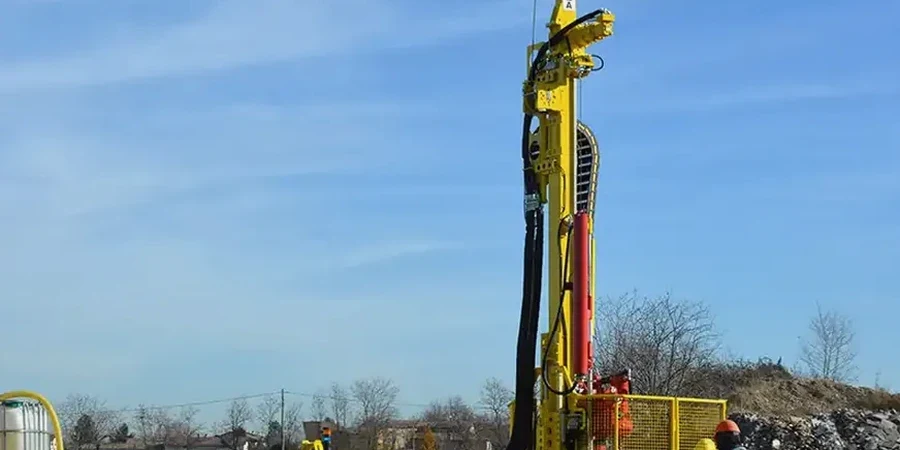
Technical reference image — Frisco Texas

Local geotechnical context

We inspected a commercial site off Eldorado Parkway where the architect had planned a slab-on-grade with perimeter beams. The SPT logs showed N-values under 4 in the upper 8 feet — saturated fat clay with no sand lenses to drain it. That soil profile, combined with Frisco's plasticity index regularly exceeding 30, meant the slab would heave seasonally and crack within two years. The engineer switched to a pier-and-beam system bearing on shale at 18 feet. Skipping the SPT at that lot would have saved a few hundred dollars in testing and cost over sixty thousand in foundation repairs down the line. That's the reality of building on expansive soils — the test isn't the expense, it's the insurance.

Need a geotechnical assessment?

Reply within 24h.

Email: [email protected]

Technical data

ParameterTypical value
StandardASTM D1586-22
Hammer typeAutomatic trip, 140 lb, 30-inch drop
Energy calibrationASTM D4633, ER correction provided
Sampling intervalEvery 2.5 ft continuous split-spoon
Borehole diameter4-inch to 8-inch hollow-stem auger
Typical depth (Frisco)20–50 ft depending on refusal
Log contentN-values, recovery, moisture, USCS classification
Reporting standardIBC 2024 Chapter 18 compliant

Complementary services

01

Residential SPT Investigation

For custom homes and small residential developments. Two to three borings to 20–30 feet with full SPT logging, swell potential assessment, and foundation recommendations for slab-on-grade or pier-and-beam systems.

02

Commercial Pre-Design SPT

Multi-boring program for retail pads, office buildings, and warehouses. Depth to 40 feet or refusal, with cross-sections showing shale interface and bearing capacity estimates for shallow and deep foundations.

03

Roadway and Utility SPT

Linear profiling along pipeline corridors and road alignments. SPT borings at 100–200 foot spacing, soil classification, and dewatering recommendations for trench stability in Frisco's clay formations.

Regulatory framework

ASTM D1586 — Standard Test Method for SPT and Split-Barrel Sampling of Soils, ASTM D2487 — Practice for Classification of Soils for Engineering Purposes (USCS), ASTM D4633 — Standard Test Method for Energy Measurement in SPT, IBC 2024 Chapter 18 — Soils and Foundations, ASCE 7-22 — Minimum Design Loads and Associated Criteria

Quick answers

How much does an SPT test cost in Frisco?

For a single residential boring to 20 feet, expect US$570 to US$780 including mobilization, drilling, SPT logging per ASTM D1586, and a signed report. Commercial sites with multiple borings are priced per linear foot, and depth to refusal influences total cost. We provide a firm quote after reviewing the site address and project scope.

How deep do you typically drill for SPT in Frisco?

Most residential borings go to 20–30 feet. For commercial structures, we target 40 feet or refusal on shale, whichever comes first. East of the Tollway, we often hit weathered shale between 12 and 25 feet; near the Trinity River tributaries, competent rock can be deeper.

What makes Frisco soils different from other DFW cities?

Frisco sits on the Eagle Ford Shale, with overlying fat clays that have plasticity indices frequently above 30. That means high shrink-swell potential. The SPT helps us gauge consistency, but we also run Atterberg limits in the lab to quantify expansion risk — something you can't ignore here.

How soon can I get the SPT report after drilling?

Field logs are available same-day. The final signed report with lab classifications, bearing capacity analysis, and foundation recommendations typically takes three to five business days. We can expedite to 48 hours for tight construction schedules.
Location and service area

We serve projects in Frisco Texas and surrounding areas.

View larger map