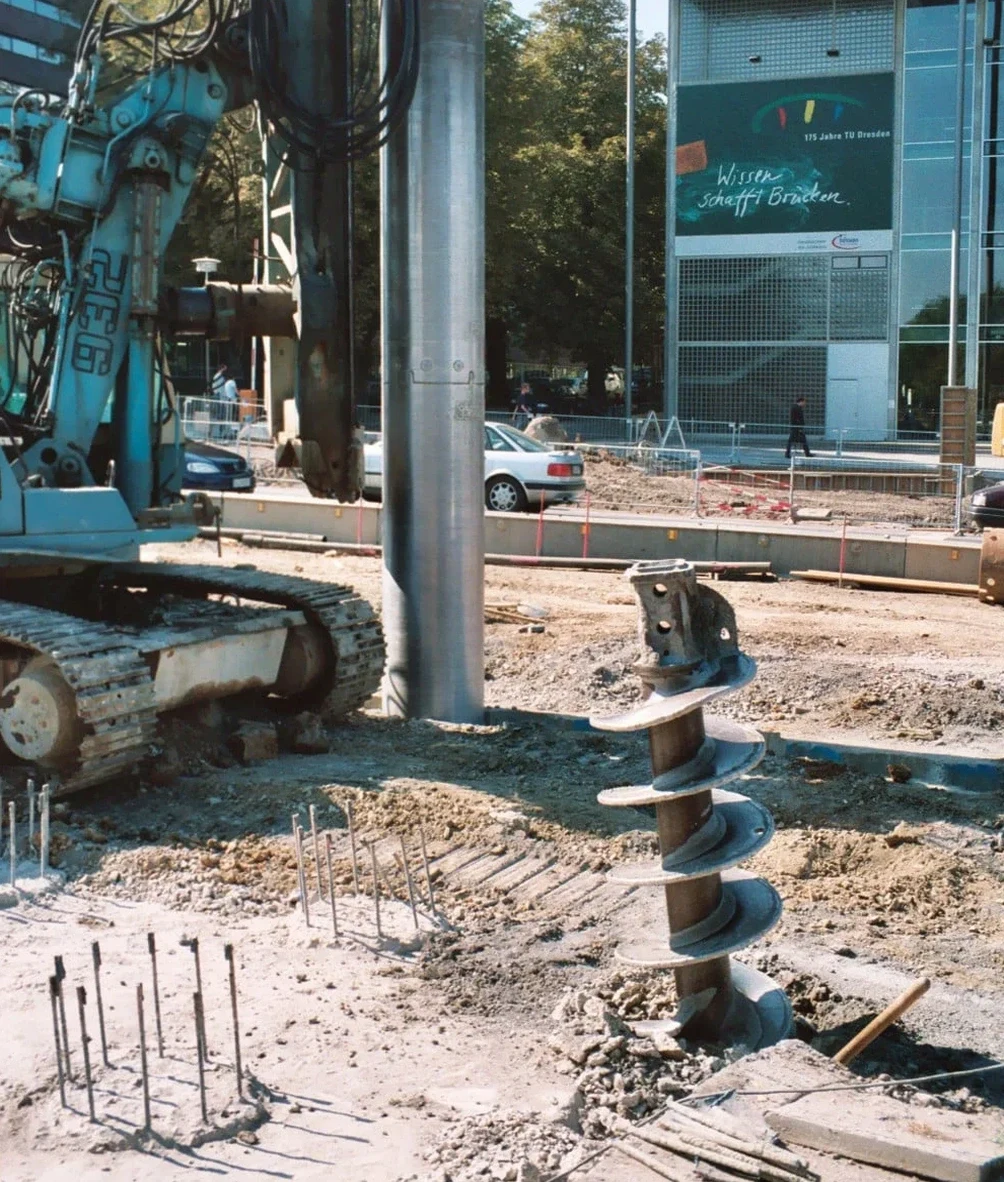
The International Building Code (IBC) coupled with ASCE 7 minimum design loads set the baseline for every deep foundation in Frisco, but the local geology demands a more rigorous approach than a simple prescriptive table. Our team reviews site-specific data from SPT drilling to establish the depth to competent bearing strata, which in Frisco often sits below 15 to 25 feet of stiff, moisture-sensitive Eagle Ford Shale. Because the city straddles the transition between the Blackland Prairie and the Eastern Cross Timbers, soil profiles can change within a single subdivision, requiring a pile foundation design that accounts for differential heave, variable bedrock elevation, and sustained lateral loads from wind events that routinely exceed 90 mph per the enhanced regional hazard maps adopted by Collin County. This means we spend as much time interpreting the stratigraphy as we do running the structural models, ensuring that the final pile layout reflects what the ground actually offers rather than a generic textbook assumption.
In Frisco, the difference between a code-compliant pile and an optimized pile foundation design is often 15 extra feet of drilling you did not need to pay for.
Local geotechnical context
Comparing two neighborhoods just four miles apart reveals the cost of ignoring site-specific investigation. Over in the Star development area west of the Dallas North Tollway, piles routinely hit competent chalk at depths under 20 feet, and contractors price their work accordingly. Move east toward the older rail-era lots near downtown, and the same depth often lands the auger in a gray, slickensided clay that loses half its undrained shear strength when saturated after a wet winter. A pile foundation design that relies solely on the western benchmark will either under-predict settlement by an inch or more, or fail the lateral load check when the structural engineer applies the full ASCE 7 wind case. We have seen re-design costs exceed thirty thousand dollars on mid-rise projects where the initial geotechnical scope skipped the deep boring needed to map the paleo-topography of the Austin Chalk surface. The expense of one extra boring is trivial next to the delay and reputational damage of a foundation that requires post-construction remediation.
Quick answers
What is the typical cost range for a pile foundation design on a single commercial lot in Frisco?
For a stand-alone commercial building on a 1- to 2-acre parcel, the geotechnical investigation and pile foundation design package generally falls between US$1,840 and US$7,050, depending on the number of borings, the depth to bedrock, and whether a static load test is required by the structural engineer of record.
Does the expansive clay in Frisco eliminate the option of a shallow foundation?
Not always. If the plasticity index is moderate and the site can tolerate controlled moisture conditioning, a stiffened slab or a mat foundation may be viable. However, for any structure exceeding three stories or with sensitive finishes, a deep pile foundation design socketed below the active moisture zone is the standard recommendation to avoid long-term differential movement.
How do wind loads influence pile design more than seismic loads in North Texas?
Frisco sits in a region of very low seismicity—Seismic Design Category A per the USGS maps adopted by the IBC—so earthquake forces rarely govern. Wind, on the other hand, controls lateral pile demand. Our models apply the ASCE 7-22 velocity pressure for Exposure C, and we check pile head deflection and bending moment against the structural engineer's allowable limits, which often dictates a larger shaft diameter or deeper socket than the gravity load case alone would suggest.