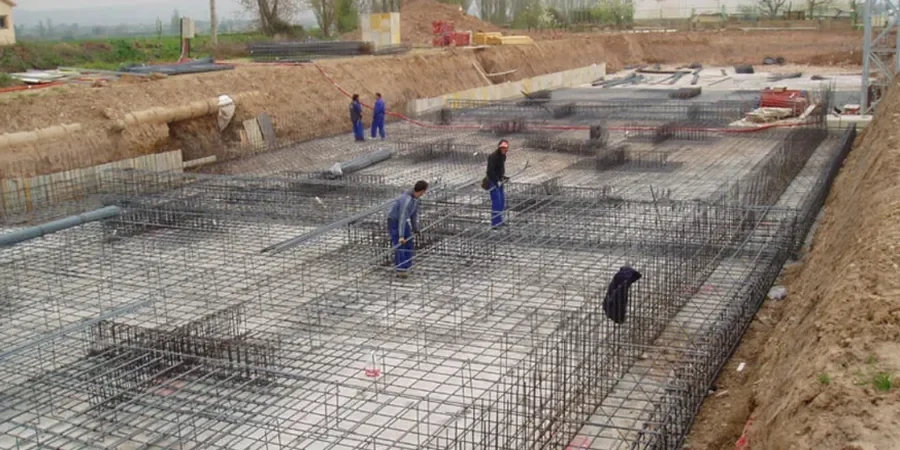
Frisco’s transformation from a small railroad stop into a booming North Texas hub has been remarkable, but the ground beneath it hasn’t changed. What we often see is a collision between rapid development and the notoriously expansive Houston Black clay. Designing a shallow foundation here isn’t just about bearing capacity; it’s about managing soil that shrinks and swells with every rain and drought cycle. Our team approaches each project by first understanding the specific clay profile on your lot, combining that with an in-situ permeability test to gauge drainage potential before we ever size a footing. For deeper insight into the soil stiffness, we integrate data from seismic refraction surveys to map the bedrock depth, which is critical in Frisco’s transitional geology between the Blackland Prairie and the Eastern Cross Timbers.
In Frisco, a foundation isn't an isolated element; it's a direct interface with an active clay body that changes volume by over 15% between wet and dry cycles.
Local geotechnical context
A practical observation we’ve made across hundreds of lots in the Frisco area is that the interface between the weathered topsoil and the intact parent clay is rarely a clean, horizontal line. Often, there’s a lens of silt or sand left behind by ancient tributaries of the Trinity River basin. If a shallow foundation design ignores these micro-layers, differential settlement becomes a real threat, even if the overall bearing capacity calculations look fine. The risk isn’t total collapse; it’s serviceability failure—slopes in floors, separation at brick ledges, and plumbing leaks from slab movement. In our experience, mitigating this means taking the borings seriously and refusing to interpolate soil properties over long distances. We insist on a close boring spacing and a thorough review of the moisture profile to prevent edge lift and center heave, the two classic modes of failure in expansive terrain.
Quick answers
What is a realistic budget range for a residential shallow foundation design package in Frisco?
For a standard single-family residential lot in Frisco, a full geotechnical investigation paired with a site-specific shallow foundation design typically runs between US$2,130 and US$3,510. The final cost depends on the number of borings required and the complexity of the slab system chosen to manage the expansive clay.
How do you handle the highly expansive clay soils common in Frisco?
We quantify the expansion potential using the Atterberg limits and suction profiles, then design a stiffened slab system or prescribe a moisture-conditioned fill pad. The goal is to create a buffer that isolates the foundation from the raw, high-plasticity clay, controlling the potential vertical rise to within tolerable limits for the structure.
Is a post-tensioned slab always necessary in Frisco, or can a conventional slab work?
Not always, but frequently. In areas with a PI above 25 and a high PVR, a post-tensioned slab offers the best resistance to bending moments caused by edge heave. On flatter sites with well-drained, silty soils near the Elm Fork Trinity River, a properly reinforced conventional slab with deepened beams can be fully adequate and code-compliant.